DCA into losers: a strategy or a coping mechanism?
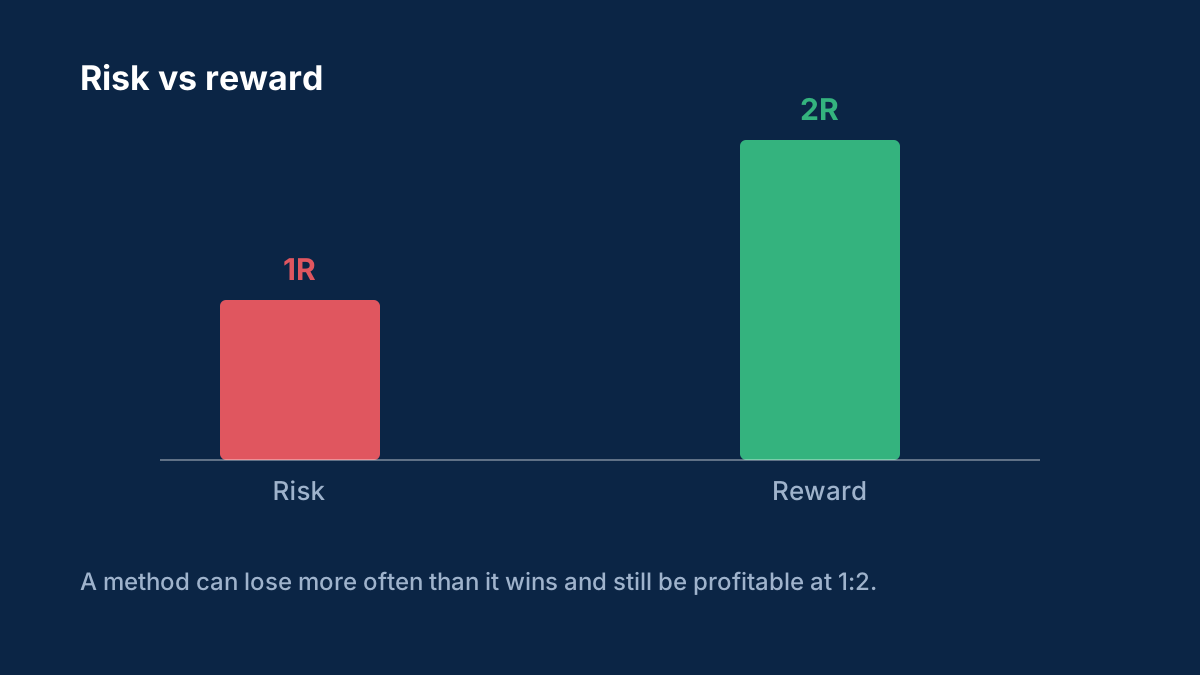
Dollar-cost averaging into a losing position lowers the average entry and widens the exposure. Defenders call it a strategy for mean reversion; critics call it averaging down with better branding. The difference is entirely in the pre-planning.
Where do you stand?
- whether you DCA and under what rules
- how the maths changed your risk per trade
- the experience that formed your view
The position sizing guide shows what DCA does to total exposure.
Background: Position sizing: how to risk a fixed percentage per trade
How much you trade matters more than where you enter. A step-by-step method for sizing positions from your stop-loss and the amount you are willing to lose.
How do I calculate lot size from risk?
Divide the amount you are willing to lose by the stop distance in pips multiplied by the pip value per lot. For $50 risk, a 25-pip stop and $10 per pip per lot, that is 0.20 lots.
What is the 1% rule in trading?
A guideline to risk no more than 1% of the account on any single trade, so a losing streak doesn't cause a drawdown you can't recover from. It is a starting point, not a guarantee.
Comments
Log in to join the discussion. Comments follow the community guidelines.
Log in to commentLoading comments…