Catching reversals: what's your top-or-bottom setup?
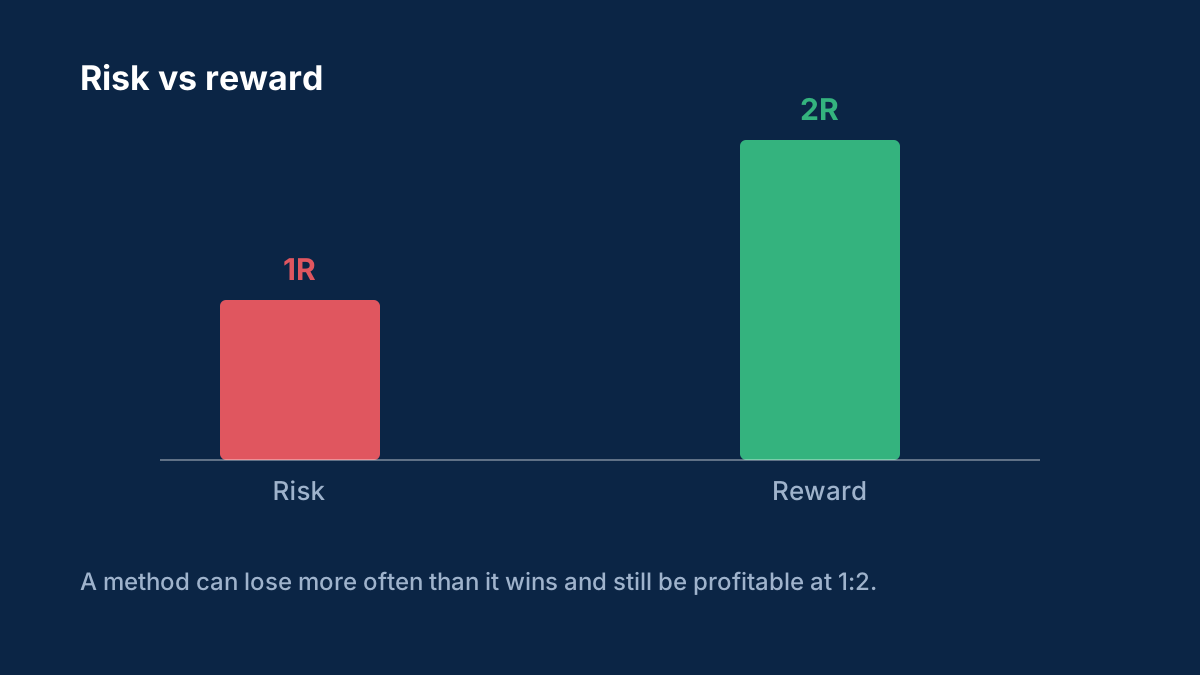
Reversal trading has the best risk-reward and the worst win rate, and the difference is in the evidence you demand before calling the turn: structure breaks, divergences, failed breaks, or a combination.
What's your reversal checklist?
- the signals you require before calling a top or bottom
- how you size a reversal attempt
- the trend you tried to fade too early

The chart patterns guide covers the classic reversal structures.
Background: Head and shoulders, double tops and double bottoms explained
Reversal patterns are confirmed at a neckline. Learn how head and shoulders and double top patterns form, where confirmation comes and how measured targets are set.
When is a head and shoulders pattern confirmed?
When price closes beyond the neckline, the line through the pullback lows on either side of the head. Before that break, the pattern is incomplete.
How do you calculate a head and shoulders target?
Measure the distance from the top of the head to the neckline and project it from the point where price breaks the neckline. Treat the result as a rough guide.
Comments
Log in to join the discussion. Comments follow the community guidelines.
Log in to commentLoading comments…