VIX regimes: do you adjust your trading to fear levels?
Low VIX means complacency and smooth trends; high VIX means panic and violent reversals. Strategies that don't adapt to the fear regime trade the same way through both — usually badly in one of them.
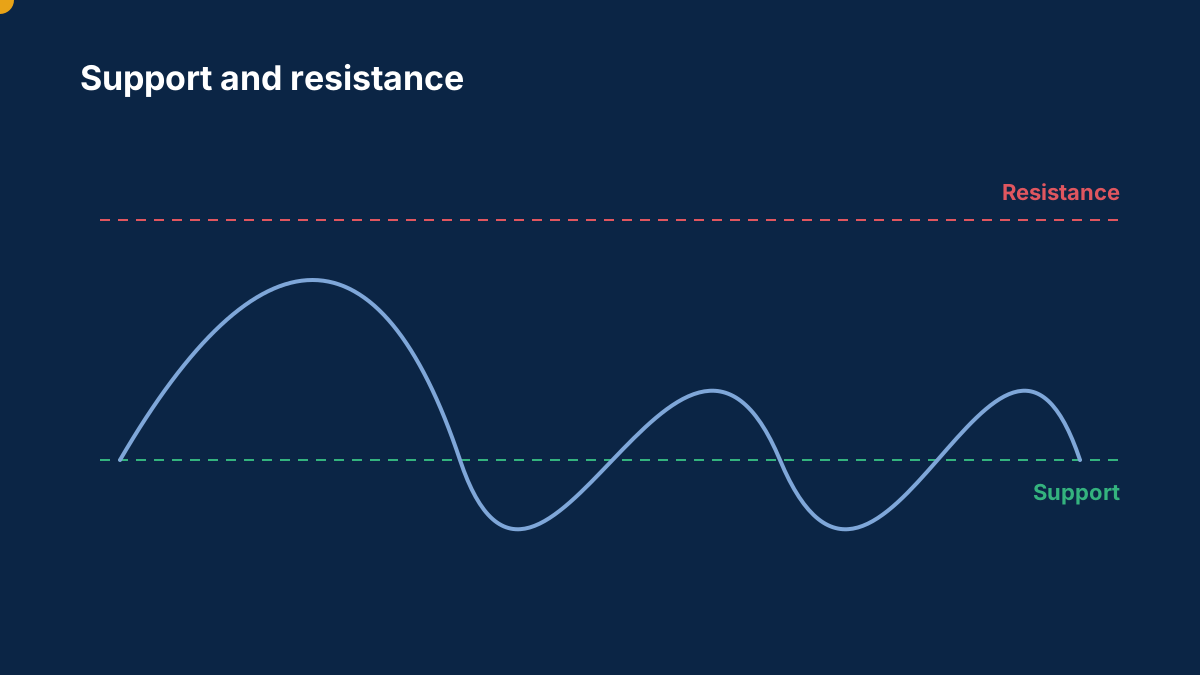
How do you adapt?
- how you read the current regime
- the changes you make between low and high VIX
- the regime shift that caught you out
The risk-on risk-off guide connects fear to currency flows.
Background: Risk-on, risk-off explained: how market mood moves currencies
When investors feel confident, higher-yielding and commodity currencies tend to rise; when fear takes over, the yen, franc and dollar often gain. How risk sentiment works and how to spot a shift.
What does risk-on mean in forex?
A period when investors are confident and willing to take risk, which tends to lift stocks, higher-yielding currencies and commodity currencies such as the Australian dollar, while the yen and Swiss franc weaken.
Which currencies rise in a risk-off market?
Typically the Japanese yen, the Swiss franc and often the US dollar, as investors look for safety and liquidity.
Comments
Log in to join the discussion. Comments follow the community guidelines.
Log in to commentLoading comments…