Trade management: what do you actually do after entry?
Entries get studied; management gets improvised. Yet the minutes and hours after entry — adjusting stops, taking partials, holding through pullbacks — decide most of the outcome.
Walk through your management:
- what you do in the first minutes after entry
- how you handle a position that stalls
- how you decide to intervene or leave it alone
The stop-loss guide and expectancy guide frame the decisions.
Background: Risk-reward ratio, win rate and expectancy: the maths behind a trading edge
A high win rate can still lose money. See how win rate and risk-reward combine into expectancy, with break-even win rates and worked examples.
What is a good risk-reward ratio in forex?
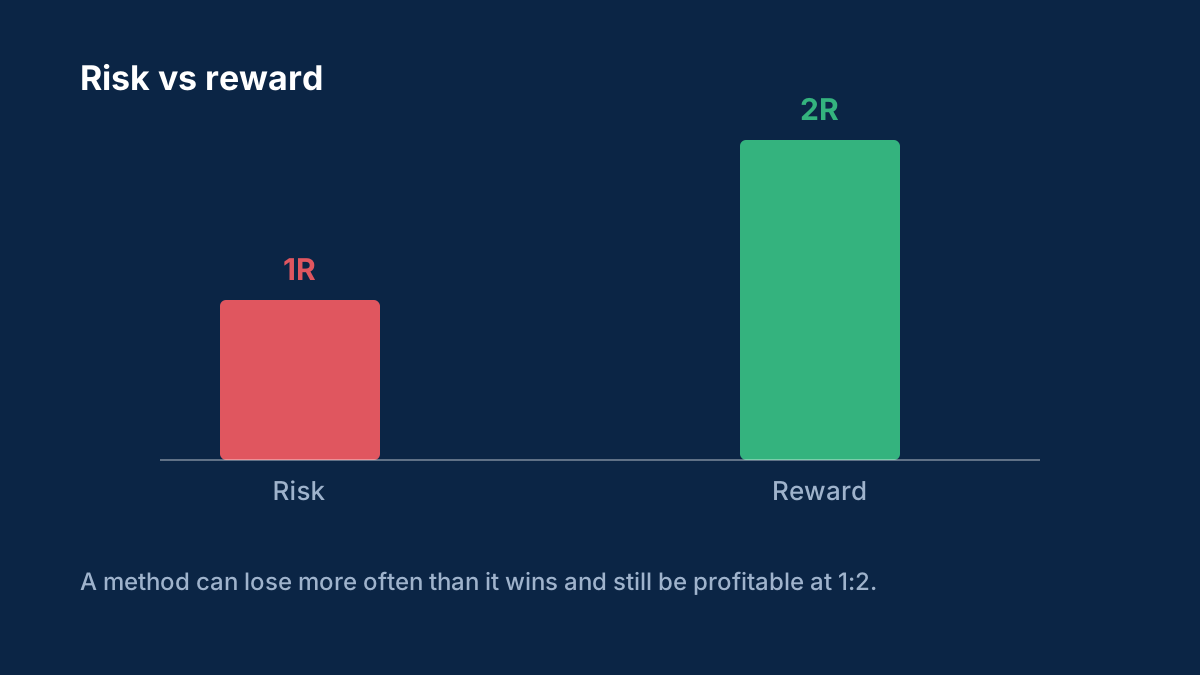
There isn't one right ratio. What matters is expectancy, the win rate and ratio together. A 1:2 ratio breaks even at about 33% winners before costs, while a 1:1 ratio needs 50%.
How do you calculate trading expectancy?
Multiply the win rate by the average win and subtract the loss rate multiplied by the average loss. Measuring wins and losses in multiples of the amount risked (R) makes the result easy to compare.
Comments
Log in to join the discussion. Comments follow the community guidelines.
Log in to commentLoading comments…