Inflation targets: why does 2% matter to central banks?
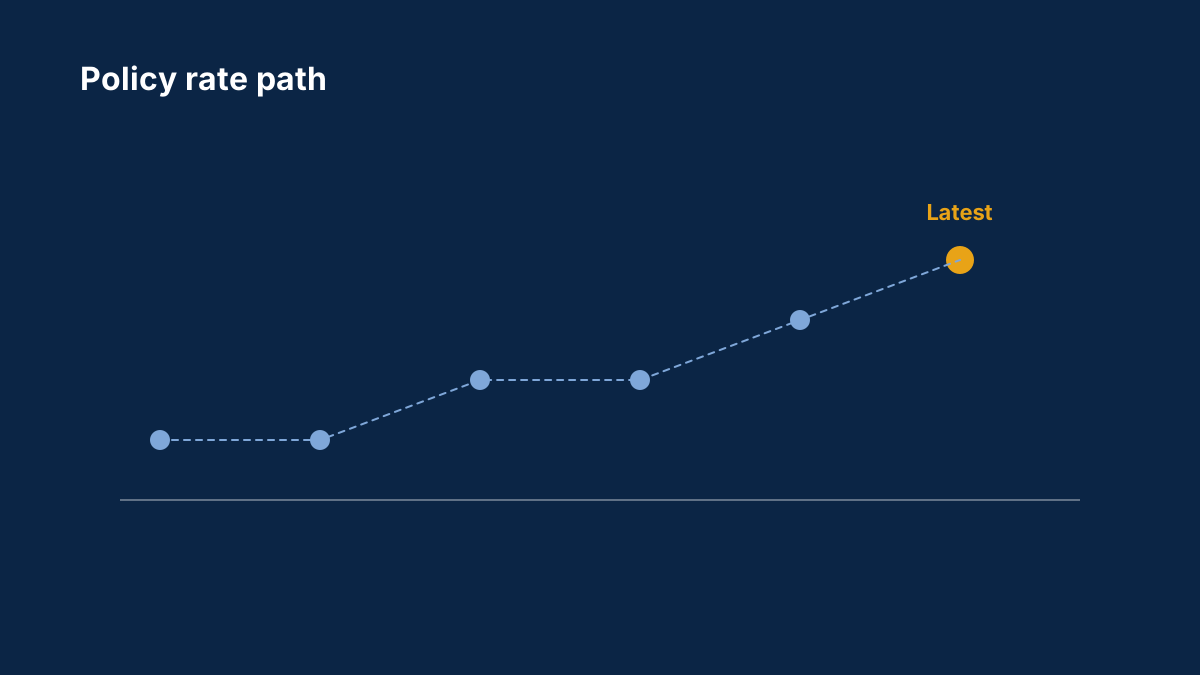
Most major central banks aim for about 2% inflation. When actual inflation runs above or below target, traders try to predict how the central bank will respond — which is half of what moves the market.
Questions for the thread:
- why is 2% the number, anyway?
- which central banks target something different?
- how do you use the target when reading an inflation release?
The inflation targets guide lists each bank's mandate.
Background: Inflation targets of the major central banks: Fed, ECB, BoE, BoJ, SNB, BoC, RBA and RBNZ
Most major central banks aim for inflation of about 2%, but the measures and ranges differ. A reference guide to each target, how recent inflation compares, and why the details matter for currencies.
What is the Federal Reserve's inflation target?
2% over the longer run, measured by the annual change in the personal consumption expenditures (PCE) price index.
Which central banks have an inflation target range?
The Bank of Canada targets 2% as the midpoint of 1–3%, the Reserve Bank of Australia targets 2–3%, and the Reserve Bank of New Zealand targets 1–3% with a focus on the 2% midpoint.
Comments
Log in to join the discussion. Comments follow the community guidelines.
Log in to commentLoading comments…