How do you time scaling out of a winner?
Closing part of a winner locks profit and reduces exposure; done at the wrong time it caps the very trades that pay for the losers. The scale-out points need the same testing as entries.
What's your schedule?
- the points where you take partials
- how much you close at each
- what you've learned from comparing schedules
The expectancy guide shows how to test partial exit schemes.
Background: Risk-reward ratio, win rate and expectancy: the maths behind a trading edge
A high win rate can still lose money. See how win rate and risk-reward combine into expectancy, with break-even win rates and worked examples.
What is a good risk-reward ratio in forex?
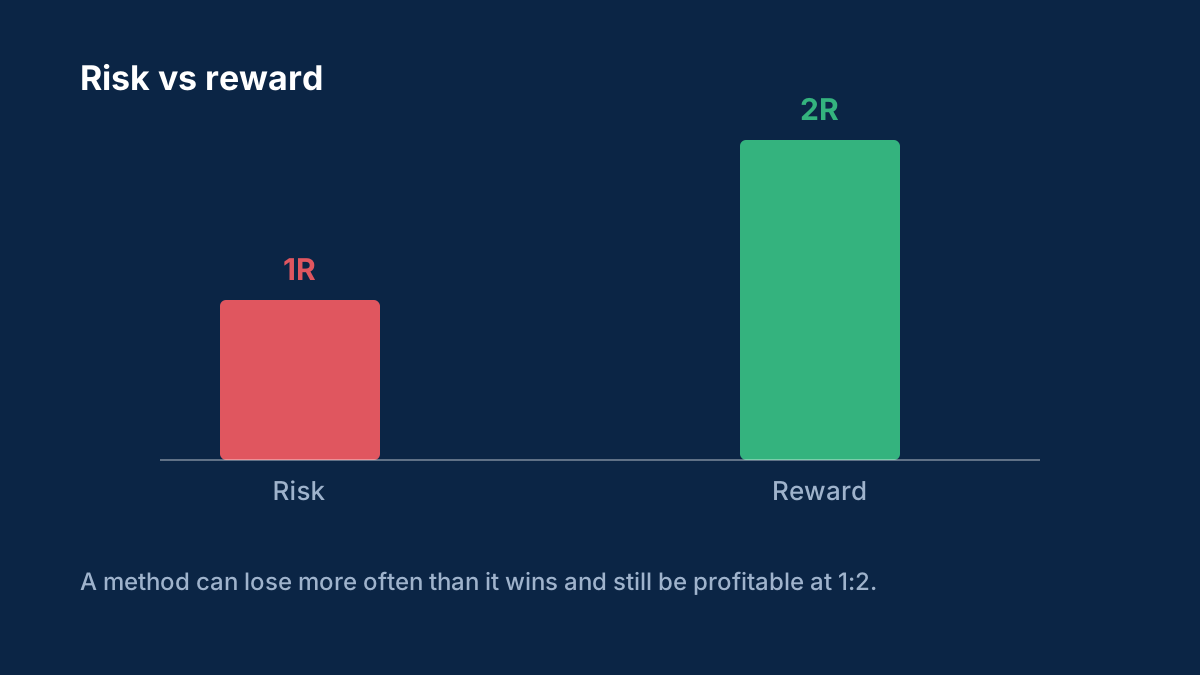
There isn't one right ratio. What matters is expectancy, the win rate and ratio together. A 1:2 ratio breaks even at about 33% winners before costs, while a 1:1 ratio needs 50%.
How do you calculate trading expectancy?
Multiply the win rate by the average win and subtract the loss rate multiplied by the average loss. Measuring wins and losses in multiples of the amount risked (R) makes the result easy to compare.
Comments
Log in to join the discussion. Comments follow the community guidelines.
Log in to commentLoading comments…