How do you practise entries without risking money?
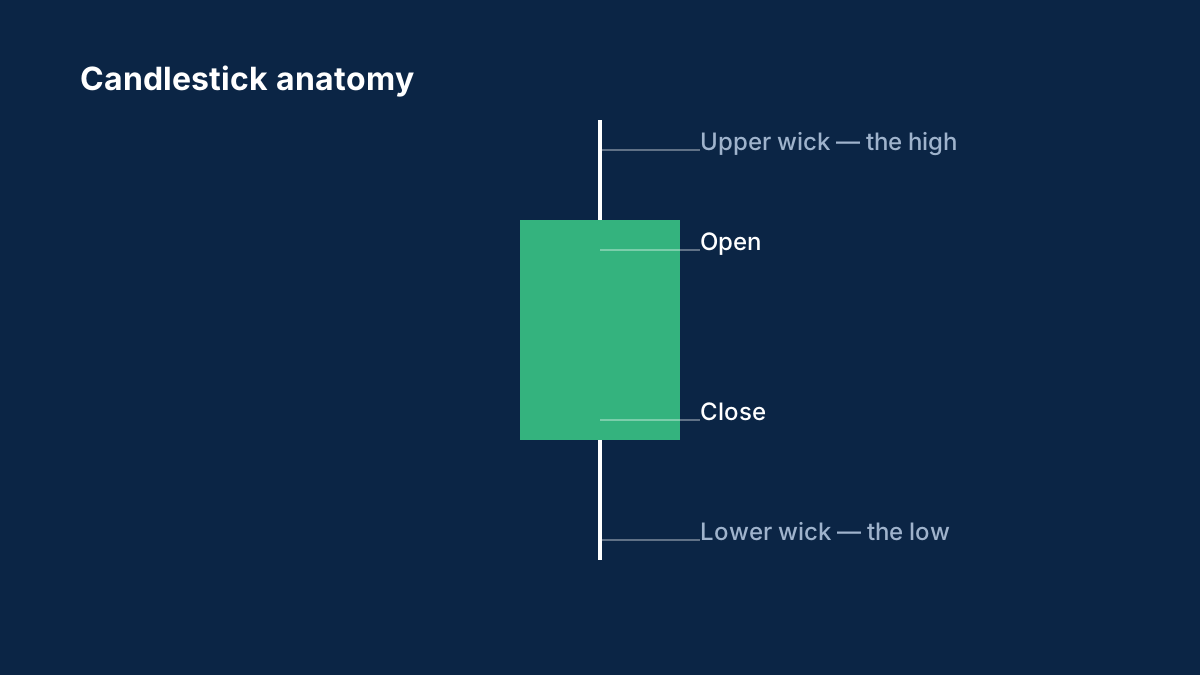
Entry practice doesn't need a live account: paper trade, mark up charts with hypothetical entries and stops, or replay old charts candle by candle. The key is writing the trade down before you know the outcome.
What's your practice setup?
- the tool or notebook you use
- how many practice trades you did before going live
- what the practice revealed about your entries
The journal guide doubles as a practice log.
Background: How to keep a trading journal that actually improves your trading
A journal turns a pile of trades into evidence. What to record, the numbers worth calculating and a weekly review routine that takes less than an hour.
What should a trading journal include?
For each trade: the pair, direction, size, entry, stop, target, risk, the reason for the trade, how you felt, the result in money and in R, whether you followed your plan, and chart screenshots.
How do I calculate expectancy?
Multiply your win rate by your average win, then subtract your loss rate multiplied by your average loss. Measured in R, a positive result means the approach has made money per trade on average.
Comments
Log in to join the discussion. Comments follow the community guidelines.
Log in to commentLoading comments…