The Asian crisis of 1997: lessons for modern EM trading
Currencies from Thailand to Korea collapsed in 1997 as pegs broke and capital fled. The pattern — hot money, current-account deficits, overstretched pegs — repeats in modern form across emerging markets.
What do you watch for?
- the warning signs you look for in EM currencies
- how you position when a crisis pattern forms
- the EM event that reminded you of 1997
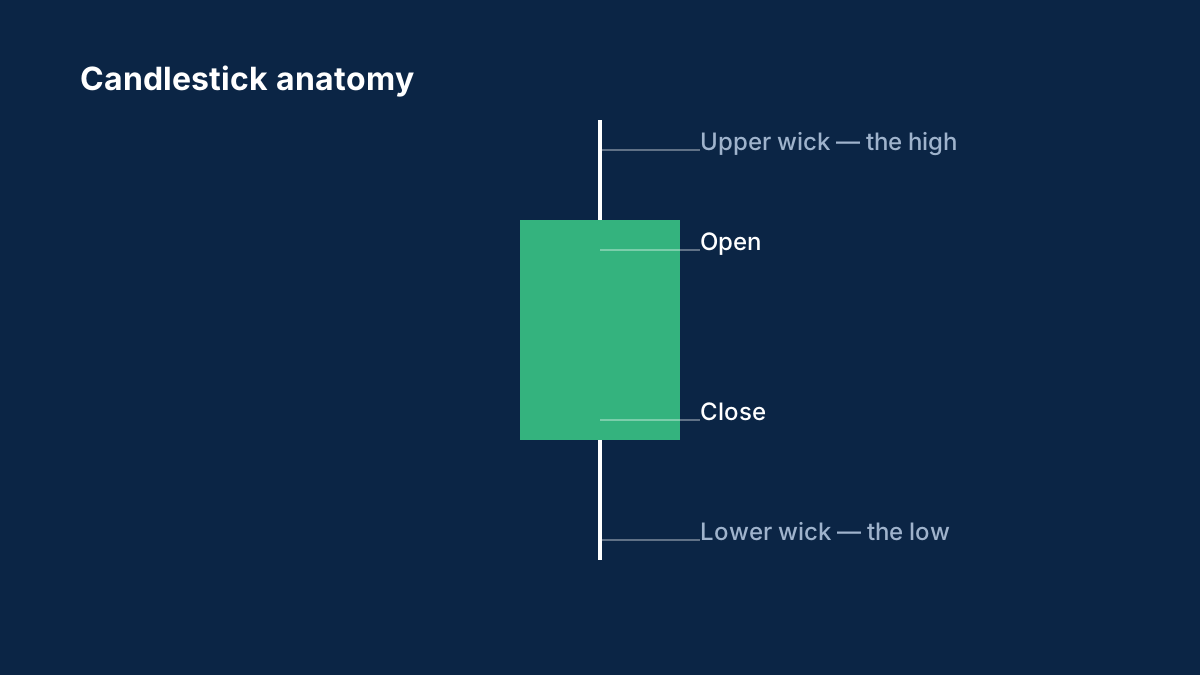
The Asian crisis guide lays out the anatomy.
Background: The Asian financial crisis of 1997: how the baht's collapse spread across a region
Thailand floated the baht on 2 July 1997, and currency pegs across East Asia gave way within months. What caused the crisis, how it spread and what currency traders can learn from it.
What started the Asian financial crisis?
Thailand floated the baht on 2 July 1997 after failing to defend its link to the US dollar. The baht's fall exposed similar weaknesses in other countries, and pressure spread across the region.
Which countries were hit by the 1997 Asian financial crisis?
Thailand, Indonesia and South Korea received large international support packages. Malaysia, the Philippines and Hong Kong also came under heavy pressure.
Comments
Log in to join the discussion. Comments follow the community guidelines.
Log in to commentLoading comments…