Trading rules as Ulysses contracts: tying yourself to the mast
Ulysses had his crew bind him to the mast so the sirens couldn't sink him. Trading rules do the same: written in calm moments, binding in tempting ones. The rules are the mast.
What's your mast?
- the rule you wrote for your own protection
- the siren it protects you from
- the time you were grateful for the ropes
The stop-loss guide is the classic Ulysses contract.
Background: Where to place a stop-loss: structure, volatility and time stops
A stop-loss belongs where your trade idea is proven wrong, not at a round number of pips. Here are the main methods and the mistakes that trigger stops early.
How far away should a stop-loss be?
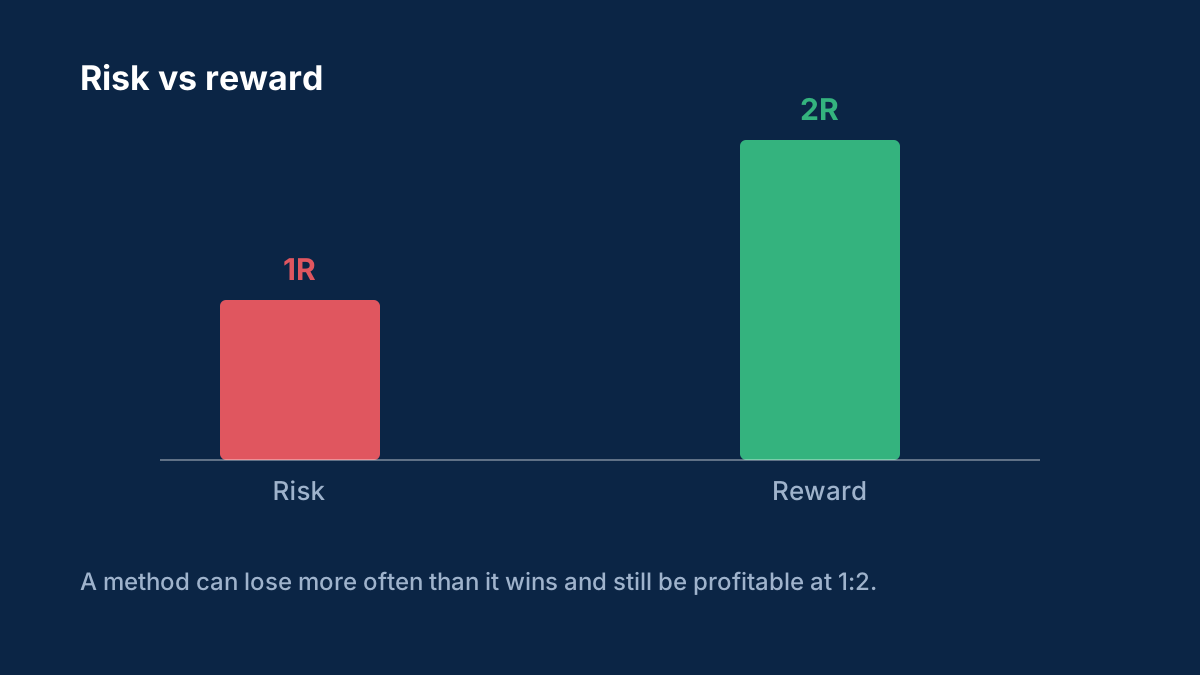
Far enough that normal price movement doesn't reach it, at the point where the reason for the trade would be proven wrong. The position size should then be set so that distance costs a fixed share of the account.
Why was my stop-loss hit when the chart didn't reach it?
Charts usually show the bid price, but sell positions are closed at the ask. When the spread widens, the ask can reach a sell stop while the bid line on the chart stays below it.
Comments
Log in to join the discussion. Comments follow the community guidelines.
Log in to commentLoading comments…