How do you set a stop on a chart you can't read yet?
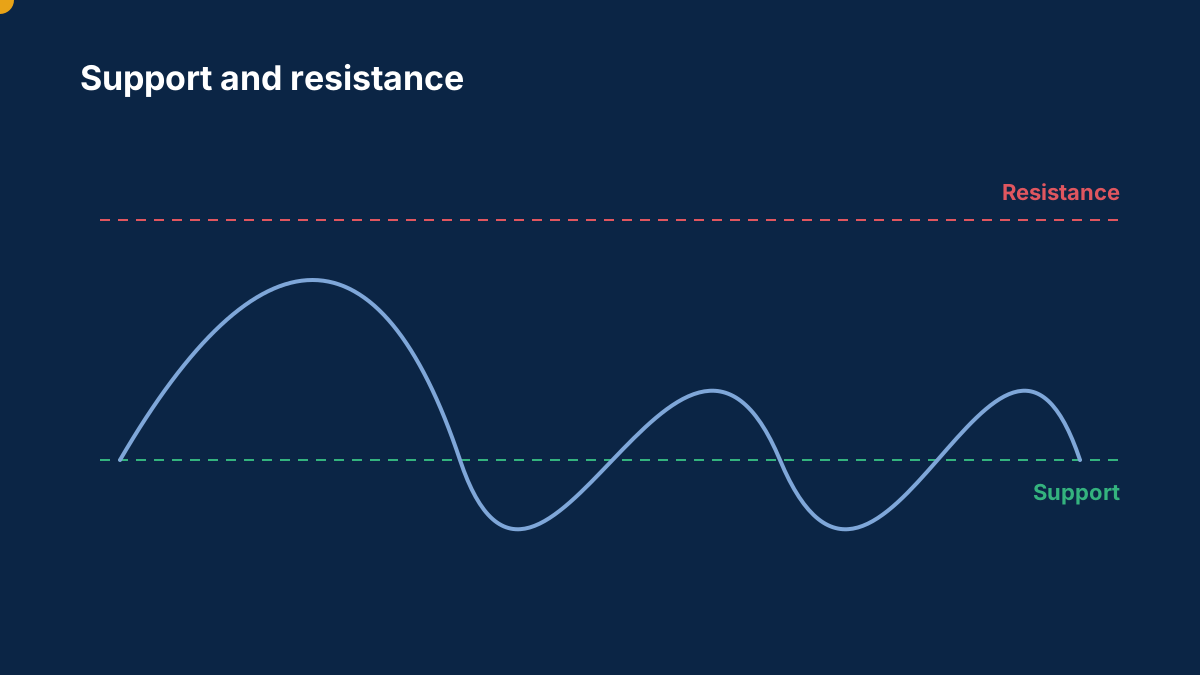
Beginners are told to put stops at "logical levels", then realise they can't yet see logical levels. In the meantime, a fixed-distance stop or an ATR-based stop keeps losses bounded while the eye develops.
What did you use before you could read structure?
- fixed pips, a percentage of daily range, or ATR
- how you chose the number
- when you switched to structure-based stops
The ATR guide gives a method that doesn't need pattern-reading skill.
Background: Average true range (ATR): measuring volatility and setting stops
ATR shows how far a pair typically moves in a period. Here is how true range is calculated, and how traders use ATR to place stops and size positions.
How is ATR calculated?
True range for each period is the largest of high minus low, high minus the previous close, and low minus the previous close, ignoring signs. ATR averages true range, typically over 14 periods with Wilder's smoothing.
What ATR multiple should I use for a stop-loss?
Many traders use 1.5 to 2 times ATR, but there is no correct number. Wider stops are hit less often and need a smaller position to keep the same amount of money at risk.
Comments
Log in to join the discussion. Comments follow the community guidelines.
Log in to commentLoading comments…